HOA and Neighborhood Party Entertainment in Duluth: Planning Checklist
By Ultimate Mobile Gaming · · 9 min read

Fast answer: Start with the person or board authorized to approve the event and outside vendors. Then create one written plan for the exact common area, resident and emergency access, parking, check-in, activity and food zones, adult coverage, vendor arrival, weather decisions, cleanup, and quote details. Do not announce an attraction until the property contact and provider have reviewed the same site facts.
An HOA social, neighborhood gathering, or resident-appreciation event can look simple on an invitation and still require careful coordination behind the scenes. The organizer may be balancing board approval, shared-property rules, normal resident traffic, mixed ages, outside vendors, food service, weather, and a setup window that cannot interrupt the community.
This Duluth planning guide gives committees a practical order for those decisions. It does not claim that a particular clubhouse, street, parking lot, park, or common area allows mobile entertainment. The property decision maker and each provider must review the exact location, written rules, and event plan before anything is booked or announced.
Duluth HOA and Neighborhood Party Planning Checklist
- Name the person or board with authority to approve the event and vendors.
- Confirm exactly which common area, room, lot, lane, or lawn is included.
- Collect the property rules, insurance requirements, access limits, and event hours.
- Draw a simple site map with resident, guest, vendor, and emergency routes.
- Separate check-in, food, seating, active play, and quieter conversation areas.
- Estimate children, teens, adults, and total households instead of using one headcount.
- Assign adult coverage, a property contact, and one event-day decision maker.
- Set vendor arrival and departure windows before invitations go out.
- Create one weather decision time and one resident communication channel.
- Send the same complete facts to every provider when requesting quotes.
The checklist applies whether the committee is considering a clubhouse social, a parking-area gathering, a block party, or another approved community event. The usable footprint and rules will differ, but the planning sequence should stay consistent.
Confirm Decision Authority Before Choosing Entertainment
Begin by identifying who can say yes. A volunteer organizer may coordinate the event without having authority to approve outside vendors, reserve adjacent parking, change access routes, or extend event hours. Ask for the board member, property manager, facilities contact, or other representative who can confirm those details in writing.
Separate the social committee’s preferences from the property’s requirements. The committee can decide the event theme and guest experience. The authorized property contact decides what space is included, what documentation is required, and which operating limits apply. A provider can then evaluate whether the proposed activity fits those confirmed conditions.
Build one approval packet
Keep the event address, date, times, site map, expected turnout, age mix, vendor list, certificates or forms, parking plan, food plan, weather process, and cleanup assignments in one shared packet. A single source reduces conflicting versions and helps the board, residents, and providers review the same plan.
Define the Exact Event Footprint
A clubhouse reservation does not automatically explain whether the patio, lawn, curb, or nearby parking spaces are included. Mark the approved boundaries on a map. Note gates, slopes, trees, medians, loading areas, fire lanes, mail areas, trash access, accessible routes, and anything else that cannot be blocked.
Use actual measurements or property documents when placement matters. Avoid phrases such as “there should be enough room.” Send photos taken from the vendor approach, the proposed activity area, and the exit path. Include any gate width, turn, overhead obstruction, surface condition, or shared lane that could affect access.
Separate reserved space from assumed space
Write down which spaces are approved for guests, which are approved for vendor use, and which must remain available to residents. If an activity needs parking spaces or a loading area, get that use confirmed. Do not rely on the fact that a space is usually empty at the proposed event time.
Protect Resident and Emergency Access
The neighborhood continues to operate during a party. Residents may enter and leave, deliveries may arrive, and emergency routes must remain clear. The plan should show how guests reach the event without filling private driveways, reserved spaces, narrow lanes, or building entrances.
Assign a parking lead when the site is shared or the turnout may arrive in waves. Provide clear directions before the event, not after the closest spaces fill. If the property uses gates or access codes, decide who will admit vendors and guests without publishing private instructions broadly.
Plan vendor arrival and departure as separate phases
A vendor may need a different route and more room while arriving than while operating. Confirm the access window, waiting location, on-site contact, setup boundary, and exit sequence. Keep guest arrival away from vehicle movement when possible, and do not begin teardown while children or families are still moving through the same area.
Map Check-In, Food, Seating, and Activity Zones
A simple site map prevents avoidable conflicts. Place check-in where arriving guests can pause without blocking the entrance. Keep food service away from active play and vendor access. Provide seating where adults can supervise and talk without standing in a queue. Preserve a quieter area for guests who need a break from noise or group activity.
For community events, several smaller zones often work better than asking one attraction to handle every age and every arrival at once. The School and Community Events page provides broader service context, while the Party Experiences page helps organizers compare formats. Current site fit, requirements, and availability still need to be confirmed for the exact event.
Plan for mixed ages without inventing capacity
Estimate young children, older children, teens, and adults separately. Ask each provider how the proposed format serves that mix during the available event window. Do not promise that every guest will participate in a certain number of minutes until the provider confirms the operating format, transitions, and realistic group flow.
Organize Check-In and Adult Coverage
Decide whether the event is for residents only, invited guests, or a wider community. Give one team responsibility for check-in, name tags or wristbands if used, schedule questions, and late arrivals. Providers should know who can answer property questions and who can make a decision if the layout or weather changes.
Adult coverage is an event-planning responsibility, not a detail to leave until the day of the party. Assign adults to entry points, active zones, food, and any transition where children could leave the event area. Tell volunteers exactly when their coverage begins and ends.
Make responsibilities visible
Use a one-page run of show with names, phone numbers, arrival times, and assignments. Include the board or property contact, event lead, parking lead, check-in lead, food lead, volunteer lead, and vendor contacts. Keep the document with the organizers rather than posting private contact information publicly.
Compare Entertainment Against the Approved Site
Choose entertainment after the property facts are confirmed. A good option should fit the approved footprint, access path, age mix, event schedule, supervision plan, and weather process. Compare the complete operating needs, not just the attraction name.
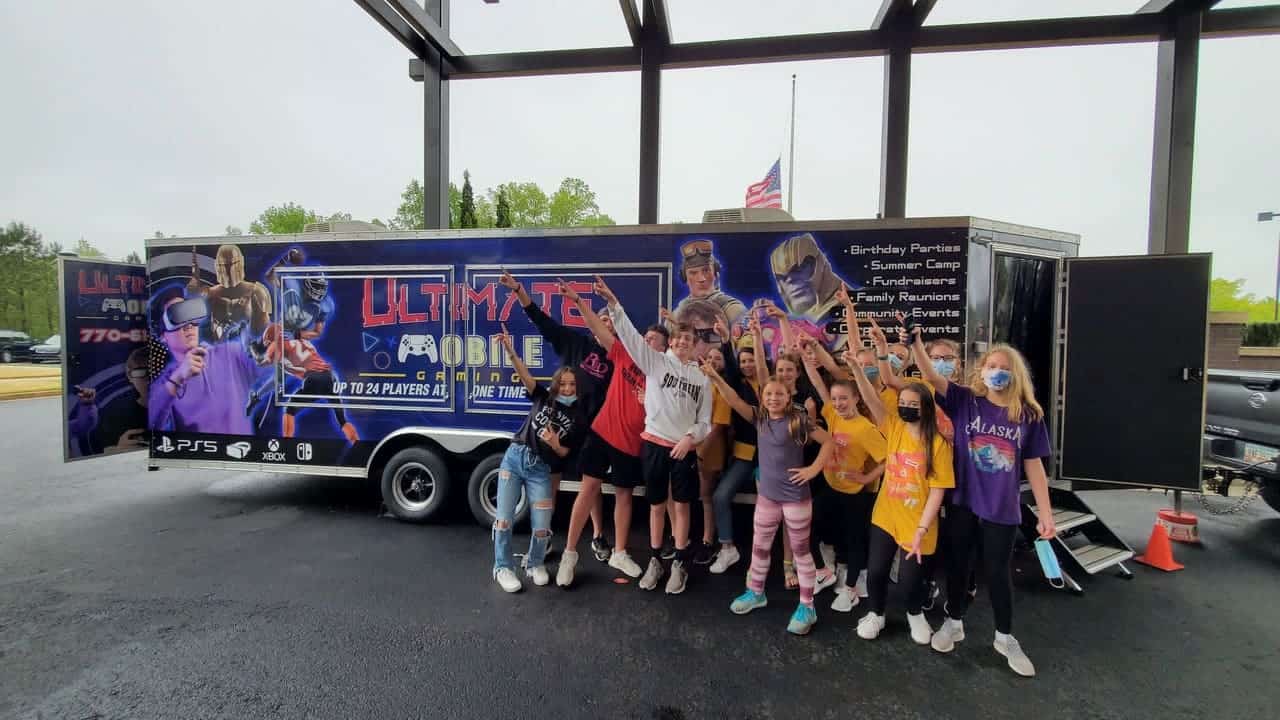
A mobile game truck can be one option when the approved Duluth-area site and group are a fit. Review the Duluth game truck service page for local service context and the Game Truck Rentals page for the broader experience. Then send the exact address and site facts for a current review. Neither page replaces property approval or a location-specific quote.
Compare options using the same event facts
Give every provider the same date, address, access window, event window, turnout estimate, age mix, approved area, parking notes, property rules, food plan, weather questions, and desired activity style. That makes differences in scope and responsibilities easier to understand. A headline price without matching facts is not a complete comparison.
Coordinate Vendors Before Invitations Go Out
Send written property rules early enough for each provider to review them. Ask what documents, access, setup area, power, staffing, supervision, weather decisions, and teardown time apply to the proposed service. Keep those answers with the approval packet.
Create one provider schedule instead of letting vendors choose overlapping arrival windows. The event lead should know when each team arrives, where it checks in, which route it uses, when the activity opens, and how departure will be coordinated. If food or other vendors use the same loading area, sequence them deliberately.
Do not announce an attraction before the fit is confirmed
An invitation creates expectations that can be difficult to change. Wait until the property contact and provider have reviewed the same address, layout, access, and schedule. If an item is still conditional, keep it out of the public event description until the condition is resolved.
Create a Weather and Resident Communication Plan
List every event element that depends on dry ground, safe vehicle access, a usable outdoor area, or comfortable guest conditions. An enclosed activity may reduce some exposure, but guests, staff, check-in, food, seating, and outdoor zones can still be affected.
Ask the property and each provider what conditions could delay, relocate, change, or stop their part of the event. Confirm who makes the final decision, the latest useful decision time, and the current change or rescheduling terms. This article does not state a provider’s or property’s weather policy.
Use one decision time and one message
Choose the event lead who will gather input and send the final update. Residents should receive one clear message covering event status, timing, parking, check-in, clothing, weather changes, and any revised location. Avoid separate committee members sending partial or conflicting updates.
Prepare a Quote-Ready Duluth Event Brief
Send these details when requesting a current quote:
- Exact address and property type
- Date, guest event window, and provider access window
- Name and role of the authorized property contact
- Expected households, total turnout, and age mix
- Approved activity area and a simple site map
- Parking, gate, turn, surface, and emergency-access notes
- Written vendor, sound, food, power, and cleanup rules
- Check-in, adult coverage, and activity-flow plan
- Weather questions and communication deadline
- On-site decision maker and best contact number
Complete inputs help the provider identify missing approvals and evaluate the request without guessing. They also help the committee compare proposals on the same scope.
FAQs About HOA Party Entertainment in Duluth
Who should approve outside entertainment for an HOA event?
Use the person or board named in the community’s governing or property-management process. A social committee may organize the event, but the authorized contact should confirm the space, vendor requirements, access, and operating limits in writing.
What should be included in a neighborhood event site map?
Show approved boundaries, entrances, resident routes, emergency access, guest parking, vendor access, check-in, food, seating, restrooms, active zones, quieter space, and any location that must remain clear.
Does a clubhouse reservation include the parking lot or surrounding common area?
Do not assume it does. Ask the property contact to identify exactly what the reservation includes and whether vendor vehicles, activities, or guest parking may use adjacent areas.
How can organizers protect resident access during the event?
Keep entrances, private driveways, reserved spaces, service areas, and emergency routes clear. Give guests parking directions, assign a parking lead when needed, and schedule vendor movement away from peak guest arrival.
What information should a social committee send for a quote?
Send the exact address, date, access and event times, turnout and age mix, approved area, site map, parking and gate notes, written rules, food plan, weather questions, and the authorized contacts.
What weather and cleanup questions should be settled before invitations go out?
Confirm what conditions could change the event, who decides, when residents will be told, what alternate space exists, which change terms apply, when teardown ends, and who is responsible for waste and restoring the common area.
Turn the Plan Into a Clear Duluth Community Event
Ultimate Mobile Gaming can review mobile entertainment options for an approved Duluth-area HOA or neighborhood event. Share the exact site, written property rules, guest mix, schedule, and access plan so the team can evaluate the request without making assumptions.
Request a Current QuotePrefer to talk through the event? Call (770) 616-9015.
Ultimate Mobile Gaming